
Why Your Well Pressure Tank Matters More Than You Think
When neighbors in New Caney TX call us about “no water” or “barely any pressure,” we often find the real culprit isn’t the pump itself, but the well pressure tank. This one component quietly protects your pump, stabilizes your water pressure, and keeps your entire residential well system running smoothly. When it starts to fail, those pressure tank problems can snowball into costly pump damage and frustrating days without water.
In our area, where many homes rely on a private well water system, ignoring signs of trouble in the pressure tank can turn a simple pressure tank repair into a full well pump replacement. That’s why we always encourage homeowners to understand the basics of how a water well pressure tank works, what can go wrong, and when to call for help.
At B-E Waterwell Services LLC, our passion is keeping New Caney TX families supplied with safe, reliable water. We’ve seen every kind of pressure tank failure and short cycling pump issue you can imagine, and we know which ones you simply should never ignore.
How a Well Pressure Tank Works in Your Residential Well System
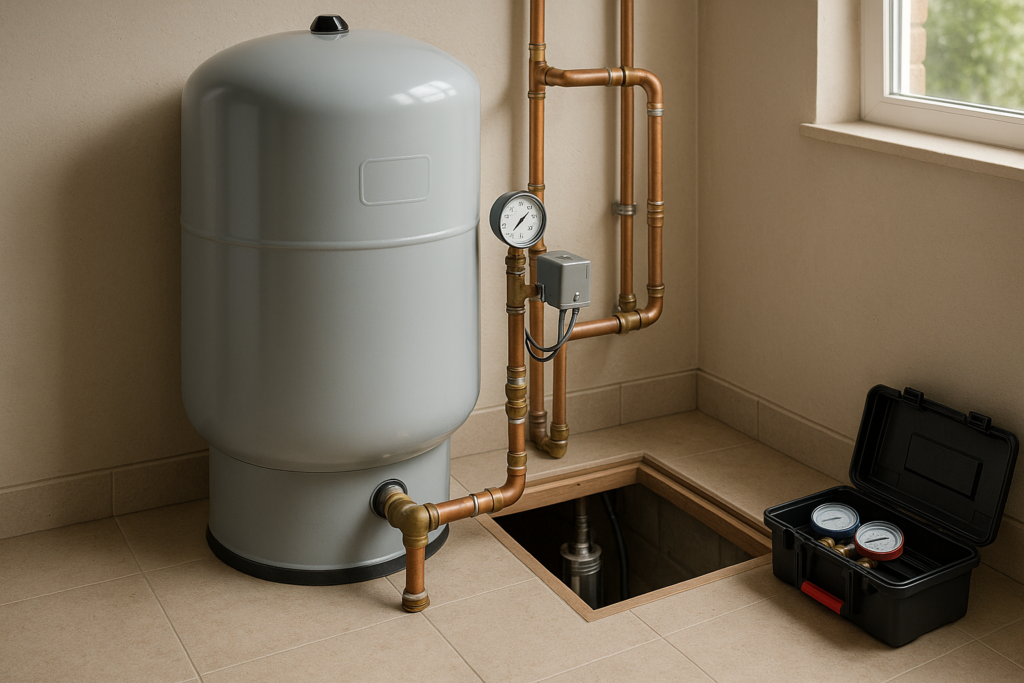
A well pressure tank is the “buffer” between your well pump and your faucets. In a typical residential well system around New Caney TX, your submersible pump or jet pump pushes water into the pressure tank, where it is stored under pressure until you open a tap. Understanding this basic function makes it much easier to spot problems early.
The relationship between the tank, pump, and pressure switch
In most homes, the core components of a well water system include:
– Submersible pump (or jet pump for shallow wells)
– Well pressure tank (often a bladder-style pressure tank)
– Pressure switch
– Piping, valves, and pressure gauge
Here’s how they work together in simple terms:
1. The pump pushes water into the pressure tank.
2. Inside the tank, water compresses a cushion of air (or an internal bladder) to create pressure.
3. The pressure switch monitors system pressure and turns the pump on and off within a set range (for example, 40–60 psi).
4. When you open a faucet, water flows out of the pressure tank first, giving you relatively constant water pressure without the pump running every second.
If the pressure switch is properly calibrated and the air charge or pre-charge pressure inside the tank is correct, your water pressure feels steady and your pump cycles on and off at healthy intervals. This is what we want in every North Houston well service job we do: dependable, constant water pressure with minimal stress on the equipment.
Types of pressure tanks: bladder, diaphragm, and standard tanks
We regularly work with several designs of pressure tanks in our local well pump and pressure tank service:
– Bladder-style pressure tank: Uses an internal rubber bladder separating water and air. This is common in modern water well pressure tank setups.
– Diaphragm tank: Similar idea, but water and air are separated by a diaphragm.
– Older non-bladder tanks: Water and air share the same space; these are more prone to becoming a waterlogged pressure tank if the air charge is not maintained.
Bladder tanks and diaphragm tanks tend to provide more reliable constant water pressure and require less frequent air adjustments. However, once the bladder tears or fails, the tank can quickly become a waterlogged tank, causing a short cycling pump and other issues that need immediate attention.
When we evaluate a pressure tank installation in New Caney TX or a nearby community like Magnolia TX, we always look at:
– Tank size and capacity compared to the pump’s gallons per minute (GPM)
– Current air charge and pre-charge pressure
– Condition of the bladder or diaphragm
– Age, corrosion, and signs of leaks
If the tank is undersized compared to the pump’s GPM, the pump will cycle more often than it should. Over time, this accelerates wear and leads to pressure tank failure and pump damage. That’s why proper sizing and configuration during pressure tank installation are so critical.
Common Pressure Tank Problems You Should Never Ignore
We’ve taken thousands of calls from New Caney TX homeowners who noticed something “just didn’t feel right” with their water pressure. Often, the symptoms start small, but they are early warning signs of pressure tank problems that can escalate fast. Ignoring these can turn a minor pressure tank repair into a full pressure tank replacement and expensive pump work.
Low water pressure, surging water, and noisy operation
Low water pressure is the most common complaint we hear when there’s an issue with a well pressure tank. You might notice:
– Showers that suddenly weaken after a strong start
– Faucets that pulse or surge instead of flowing smoothly
– Sprinklers that don’t spray as far as they used to
These low water pressure issues can be caused by:
– A failing bladder tank that’s become partially waterlogged
– Incorrect pre-charge pressure in the tank
– A malfunctioning pressure switch cutting in and out at the wrong pressures
– Sediment buildup in the lines or tank
Sometimes you’ll also hear:
– Rapid clicking from the pressure switch
– Air spurting from faucets
– Unusual pump noises starting and stopping too frequently
In our well pump troubleshooting, we’ve found that homeowners often assume low water pressure means the submersible pump is dying. But many times, the fix is actually a pressure tank repair or adjustment instead of a complete pump replacement.
Short cycling pump and waterlogged pressure tank
Short cycling is one of the most dangerous situations for your well pump and pressure tank. Short cycling means the pump turns on and off very quickly, often every few seconds or every minute, even with small water demands.
Signs of a short cycling pump include:
– The pump kicking on every time you quickly open a faucet
– The pressure gauge bouncing rapidly between cut-in and cut-out pressures
– The pressure switch clicking repeatedly in fast succession
A waterlogged pressure tank is the most common cause of short cycling. When the tank cannot hold the proper air charge, it fills almost entirely with water. Since water cannot compress like air, the system has almost no storage capacity. The pump is then forced to cycle constantly to keep up with even tiny changes in demand.
We consider a waterlogged tank and continuous short cycling an emergency well service situation, because:
– The pump motor can overheat and fail prematurely.
– Electrical components like the pressure switch can burn out.
– You may experience sudden loss of water if the pump quits.
If you ever notice rapid on/off behavior, it’s time to call a local North Houston well service professional like B-E Waterwell Services LLC immediately. Prompt pressure tank maintenance or pressure tank replacement can save your submersible pump from expensive damage.
DIY Checks vs. When to Call for Professional Well Pump and Pressure Tank Service
We know many New Caney TX homeowners are hands-on and comfortable doing basic well pump troubleshooting. There are a few safe checks you can perform before calling for professional well pump and pressure tank service, but it’s important to know your limits. The wrong adjustment can cause more harm than good.
Simple homeowner checks for your water well pressure tank
Here are some practical steps you can take to get a sense of your system’s health:
– Listen for short cycling
Watch your pressure gauge while running a faucet. If the pump turns on and off rapidly, your well pressure tank or pressure switch likely needs attention.
– Check system pressure range
Many residential well systems operate around 30–50 psi or 40–60 psi. If your gauge shows very low maximum pressure, that can explain low water pressure in the house.
– Inspect for visible leaks
Look around the base of the pressure tank, the fittings, and the lines. Any moisture, rust, or spray indicates a problem that may require pressure tank repair or replacement.
– Feel the tank
Carefully touch the tank’s side. A healthy bladder-style pressure tank usually feels hollow or “empty” in the top portion (air) and heavier near the bottom (water). A fully “solid” feel from top to bottom can indicate a waterlogged tank.
If you’re comfortable and know how to safely isolate power, you can also:
– Turn off power at the breaker
– Drain the system
– Check the air charge at the Schrader valve on top of the tank with a tire gauge
The air charge should usually be 2 psi below the pressure switch cut-in pressure (for example, 38 psi for a 40–60 system). If the pre-charge pressure is far off, that can cause erratic operation and low water pressure.
When to call B-E Waterwell Services LLC for professional help
There are clear warning signs that it’s time to call in professionals for pressure tank installation, pressure tank repair, or pressure tank replacement:
– Persistent low water pressure throughout the home
– Short cycling pump you can’t resolve with simple checks
– Visible leaks, rust, or bulging on the pressure tank
– A submersible pump or jet pump that runs continuously
– A tripped breaker that keeps resetting when the pump tries to start
– An older non-bladder tank that frequently loses air charge
Our team handles everything from quick pressure switch adjustments to full well pump and pressure tank service for homes in New Caney TX, Magnolia TX, and across the North Houston well service area. We use accurate gauges to set pre-charge pressure, verify pressure switch cut-in and cut-out levels, and check pump performance in gallons per minute (GPM) so the entire system is balanced.
Working with a licensed, experienced company like B-E Waterwell Services LLC means you get:
– Correct sizing and configuration for your well pressure tank
– Professional diagnosis of waterlogged pressure tank vs. pump issues
– Code-compliant pressure tank installation and electrical work
– Honest guidance on when repair is safe vs. when pressure tank replacement is the better long-term solution
For more technical background on private wells and pressure systems, we often refer homeowners to resources like the Groundwater Foundation (https://groundwater.org) as a helpful educational starting point, and then we tailor advice to the specific New Caney TX conditions we see on site.
Repair, Replacement, and Preventive Maintenance for Your Well Pressure Tank
We’ve seen a simple pressure tank problem quietly drain a family’s budget when it’s ignored. On the other hand, we’ve also helped many New Caney TX homeowners extend the life of their entire well water system with timely pressure tank maintenance and smart upgrades. The key is understanding your options: when to repair, when to replace, and how to prevent future trouble.
When a repair makes sense vs. when to replace the tank
Pressure tank repair can be the right answer when:
– The tank is relatively new and high quality.
– The issue is limited to the pressure switch or gauge.
– The pre-charge pressure is just out of adjustment.
– Fittings or valves need tightening or replacement, but the tank body is sound.
Our technicians often restore normal operation with:
– Pressure switch calibration or replacement
– Correcting the air charge to match the system
– Replacing minor plumbing components or unions
However, pressure tank replacement is usually the smarter move when:
– The tank shell is rusted, corroded, or leaking.
– The internal bladder has failed and cannot be repaired.
– The tank is chronically waterlogged, even after recharging.
– The tank is significantly undersized for your pump’s GPM and your household water use.
– The tank is well past its expected service life.
When we recommend pressure tank installation for a new or replacement tank, we size it based on:
– Pump flow rate in gallons per minute
– Expected peak water demand (showers, sprinklers, appliances)
– Desired level of constant water pressure and comfort
Our goal is to reduce cycling, protect your submersible pump or jet pump, and give your family dependable water for years. With a properly sized and installed water well pressure tank, your pump runs less often, lasts longer, and your day-to-day experience at the tap simply feels better.
Preventive pressure tank maintenance for New Caney TX homeowners
A little pressure tank maintenance goes a long way toward avoiding emergency well service calls. We coach our customers to adopt a simple routine:
– Annual system check
Once a year, have a professional check your pressure switch settings, tank pre-charge pressure, and overall operation of your well water system.
– Visual inspection every few months
Walk by your pressure tank and look for rust, moisture, or any bulging in the tank shell. Listen for unusual clicking or humming.
– Monitor water pressure changes
If you notice gradual low water pressure, don’t wait until it becomes severe. Early well pump troubleshooting often reveals minor issues that can be fixed quickly.
– Keep area around tank clean and dry
A clear, dry space around the tank helps you spot leaks early and protects components from corrosion.
At B-E Waterwell Services LLC, we treat every New Caney TX system like it’s our own. Our preventive service visits often pay for themselves by catching failing pressure switches, borderline pre-charge pressure, or early waterlogged conditions before they turn into major pressure tank failure or pump burnout.
Whether you need routine pressure tank maintenance, new pressure tank installation, or urgent pressure tank replacement, we’re prepared to help you make the most cost-effective decision for your home.
Protecting Your Family’s Water: Next Steps for Homeowners in New Caney TX
Living on a private well in New Caney TX has real advantages: independence from city water, fresher taste, and control over your own residential well system. But that independence comes with responsibility, especially when it comes to your well pressure tank. Ignoring signs like low water pressure, short cycling, or a suspected waterlogged pressure tank can put your entire well water system at risk.
We’ve seen how quickly a minor issue with a bladder tank or pressure switch can escalate into full pressure tank failure and pump damage. The good news is that most of these situations are preventable with timely pressure tank repair, smart pressure tank replacement when needed, and regular pressure tank maintenance.
If you’ve noticed any of these warning signs:
– Inconsistent or low water pressure in showers or faucets
– Rapid on/off cycling of your pump
– Clicking sounds from the pressure switch
– Visible rust, leaks, or bulging on your pressure tank
– A submersible pump or jet pump that never seems to shut off
then it’s time to have a professional evaluate your system. Our team at B-E Waterwell Services LLC proudly serves New Caney TX, Magnolia TX, and the wider North Houston well service area with honest, thorough well pump and pressure tank service.
We’ll inspect your well pressure tank, verify the pre-charge pressure, confirm proper pressure switch operation, and check how many gallons per minute your pump is delivering. From there, we’ll explain your options clearly—whether that’s a simple adjustment, targeted pressure tank repair, or a properly sized pressure tank installation that protects your system for the long haul.
Your family’s water supply is too important to leave to guesswork. If you suspect pressure tank problems or just want peace of mind about your private well, we’re here to help.
Reach out to B-E Waterwell Services LLC today through our contact page at https://bewaterwells.com/ to schedule service, ask questions, or request emergency well service. We’re ready to make sure your well water system delivers the constant water pressure, reliability, and safety your home deserves.