
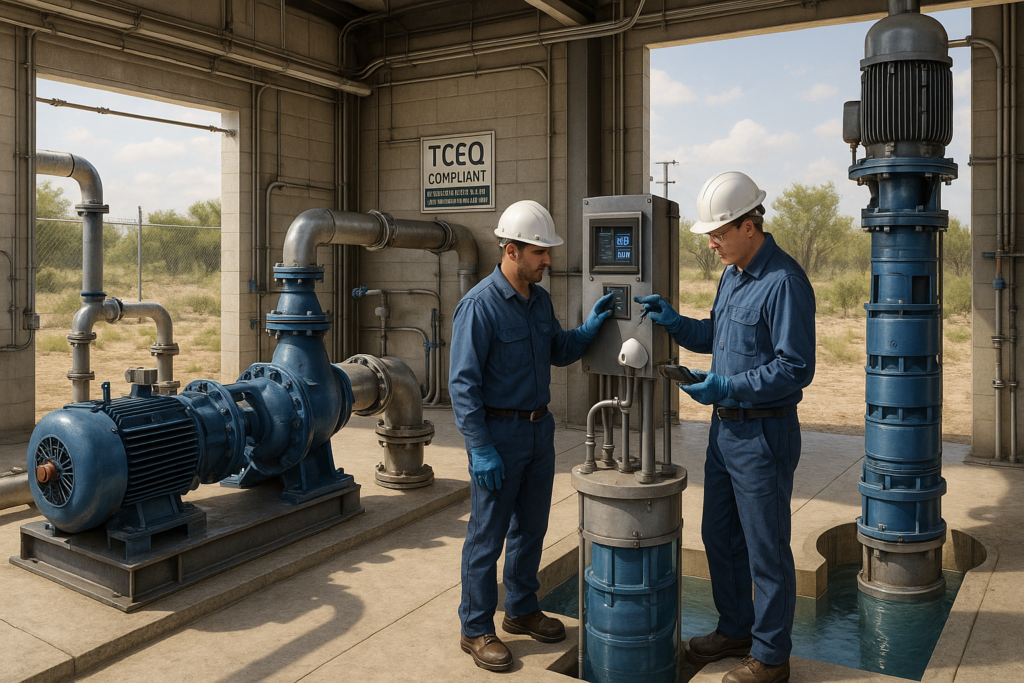
The Hidden Design Choices Behind Reliable Industrial Water Well Pump Systems in Tomball TX
When we talk with plant managers and operators around Tomball TX, we hear the same thing over and over: “Just make sure the water keeps flowing.” Behind that simple request is a lot of engineering and planning that most people never see. Our team at B-E Waterwell Services LLC has spent years designing and supporting industrial water well pump systems that keep critical operations running no matter what.
A successful industrial pump setup starts with understanding the work it has to do. We look at your required flow rate, head pressure or total dynamic head, groundwater conditions and aquifers, and the realities of your site power and controls. From there, we match the right style of industrial pump, the right controls, and the right level of redundancy so your operation is protected.
For many industrial water well projects, we lean on three core technologies: the centrifugal pump, the submersible pump, and the vertical turbine pump. Each has its own best use case.
– Centrifugal pump options are great above-ground when water levels are stable, distances are moderate, and space for a pump room is available.
– A submersible pump shines when the industrial water well is deep, groundwater levels fluctuate, or noise must be minimized.
– A vertical turbine pump often becomes our go-to in high-demand industrial facilities or for commercial water supply projects that need large, continuous volumes at stable water pressure.
In Tomball TX and the broader North Houston region, we also have to consider unique aquifer behavior, sand and mineral content, and the potential for corrosive fluids. For plants that handle chemicals or produce aggressive wastewater, we specify chemical-resistant pumps and components so the pump system maintains reliability and durability over the long haul.
Whenever we design industrial water well pump systems, we are thinking today, five years from now, and fifteen years from now. That means:
– Sizing for current and projected future flow rate needs.
– Accounting for seasonal changes in groundwater conditions and aquifers.
– Including variable frequency drive (VFD) controls where they truly add value.
– Planning for practical pump repair, replacement pump options, and backup pump systems.
From manufacturing plants to ranch and farm water systems just outside town, we build every industrial water pump layout as if it were our own operation on the line. That mindset is how we keep high-demand customers supplied—day in and day out.
Choosing the Right Industrial Pump Technology for Heavy-Duty Operations
One of the biggest “secrets” behind a smooth-running industrial pump is matching the right pump technology to the right job. In our corner of Texas, we see everything from high-volume manufacturing plants to large irrigation systems and emergency water supply setups. Each one calls for different industrial pump strategies.
Centrifugal, Submersible, Vertical Turbine, and Positive Displacement: What Really Matters
When we lay out an industrial water pump plan, we often compare four main pump types:
– Centrifugal pump
– Submersible pump
– Vertical turbine pump
– Positive displacement pump
A centrifugal pump is the workhorse of many industrial facilities. It’s ideal for clean water, moderate to high flow rate needs, and systems where head pressure is not extremely high. In North Houston industrial pump projects, we frequently use centrifugal units in booster stations to maintain consistent water pressure across a plant or campus.
A submersible pump does its work below the waterline inside the well. For deeper industrial water well systems around Tomball TX, submersible pumps allow us to push water up efficiently while protecting the industrial pump from exposure and freezing. They are quieter, space-saving, and often simpler to protect from contamination.
A vertical turbine pump becomes our top choice when you need very high flow and higher total dynamic head, such as for:
– Commercial water supply for large buildings or business parks
– Central supply for manufacturing plants with multiple processes
– Large ranch and farm water systems that lift from deep wells or pits
Because a vertical turbine pump stack is custom-built in stages, we can tune the pump efficiency to the exact head pressure and flow rate your site demands.
Positive displacement pumps are more specialized, but we still see them often. When viscosity, precise dosing, or corrosive fluids are involved, we may add a positive displacement pump or chemical-resistant pumps to the overall system. For example, when we deal with water treatment chemicals, corrosive fluids, or additives, a positive displacement unit can deliver accurate, consistent volumes no matter the water pressure.
How We Size and Configure Industrial Water Well Pump Systems
Choosing the right type of industrial pump is only the first step. We then engineer the full pump system around your real-world operating profile. We look at:
– Minimum and peak flow rate in gallons per minute across shifts.
– Available electrical service and the benefits of VFD controls.
– Static and dynamic water levels in your industrial water well.
– Total dynamic head from the water level to your highest demand point.
Variable frequency drive (VFD) controls are a powerful tool when used correctly. With VFDs, we can gently ramp pumps up and down, protect against water hammer, and maintain stable water pressure even when demand is constantly changing. This boosts pump efficiency, reduces the stress on motors and piping, and can extend the life of the industrial pump system.
When we complete a pump installation or major pump replacement, we also make sure it lines up with Texas Commission on Environmental Quality (TCEQ) regulations. That means:
– Proper well seals and sanitary protection.
– Backflow and contamination prevention devices where needed.
– Documentation and testing that satisfies industrial pump services in Texas standards.
By combining the right pump type, smart controls, and regulatory compliance, we give our Tomball TX clients equipment that doesn’t just work—it works efficiently, reliably, and within the rules from day one.
Keeping Operations Running: Maintenance, Monitoring, and Fast Industrial Pump Repair
Even the best-designed industrial water well pump systems can’t be “set it and forget it.” What keeps high-demand operations running is the discipline to monitor performance, plan system maintenance, and jump on problems before they become full shutdowns. That’s where our long-term partnerships really shine.
Building a Practical Industrial Pump Maintenance Program
We believe every industrial facility should have a customized industrial pump maintenance program. In our work around Tomball TX, Magnolia TX industrial pump customers, and the wider North Houston industrial pump corridor, we tailor these programs to the environment and the duty cycle of each system.
A solid industrial pump maintenance program usually includes:
– Regular performance checks: flow rate, water pressure, and amp draws.
– Visual inspections of piping, valves, seals, and electrical components.
– Scheduled lubrication, seal replacement, and motor testing.
– Periodic checks on groundwater conditions and aquifers for drawdown changes.
For large commercial water supply systems or manufacturing plants, we often integrate monitoring that tracks pump efficiency over time. When we see energy usage rise for the same output, it’s a sign that wear, scaling, or partial blockages are developing. Stepping in early with targeted pump repairs or cleaning helps avoid sudden failures.
Our team also stresses contamination prevention as a maintenance priority. That means verifying that well heads are properly sealed, backflow prevention is working, and no surface runoff or industrial fluids can reach the well. Contamination prevention measures not only protect water quality but also protect pumps from abrasive solids and corrosive fluids that shorten their service life.
Emergency Repairs, Backup Pump Systems, and Operational Resilience
No matter how well we plan, there will be times when an industrial pump fails at the worst possible moment. That’s why we design industrial water well pump systems with resilience in mind and stand ready with emergency service when it’s needed most.
We regularly recommend backup pump systems for:
– Critical manufacturing plants that can’t afford production downtime.
– Facilities with essential commercial water supply responsibilities.
– Irrigation systems protecting high-value crops or turf.
– Sites that depend on the well for emergency water supply or fire protection.
A backup pump system can be as simple as a second submersible pump standing by in a dual-column configuration or as sophisticated as a redundant vertical turbine pump array with automatic transfer controls. For some industrial facilities, a smaller backup industrial water pump at reduced flow rate is still enough to maintain safe operations until a full repair is done.
When something does go wrong, our emergency repairs and emergency service teams focus on:
– Rapid diagnosis: electrical vs. mechanical vs. well-column issues.
– On-site pump repair where possible to reduce downtime.
– Fast sourcing of a compatible replacement pump when required.
– Verifying that restored systems reach target water flow and pressure.
Because B-E Waterwell Services LLC is built around industrial pump services in Texas, we know how to navigate local suppliers, power providers, and TCEQ regulations quickly. Our goal is always the same: get your industrial water well pumping again with maximum reliability and durability, and document what went wrong so we can reduce the chances of a repeat failure.
If you want to explore maintenance planning further, we often point customers to industry guidance and resources such as American Water Works Association and similar organizations for best practices on water system management.
Optimizing Efficiency and Compliance for Industrial Water Pump Operations in Texas
In today’s environment, simply moving water is not enough. Our clients in Tomball TX, Magnolia TX, and across North Houston want lower operating costs, higher dependability, and no regulatory surprises. That’s where system-wide optimization comes in for any industrial water pump or industrial water well project.
Boosting Pump Efficiency with Smart Design and Controls
We’ve seen time and again that a well-optimized industrial pump system can pay for itself in saved energy, fewer pump repairs, and longer equipment life. We start by mapping the complete hydraulic profile of your site: suction conditions, discharge elevations, piping layout, and friction losses that add to total dynamic head.
From there, we tune the system for pump efficiency using techniques such as:
– Selecting the right centrifugal pump or vertical turbine pump curves for typical operating points.
– Matching submersible pump sizing to realistic drawdown in the industrial water well.
– Using VFD controls to maintain steady water pressure instead of cycling on and off.
– Right-sizing motors so they don’t continuously run below their sweet spot.
Variable frequency drive (VFD) controls are especially important for irrigation systems, ranch and farm water systems, and manufacturing plants with changing demand. Instead of over-pumping and throttling with valves, VFDs let the industrial pump adjust speed so the flow rate matches what the process needs in real time. The result is less wear, fewer emergency repairs, and improved reliability and durability.
When corrosive fluids or aggressive environments are part of the picture, we integrate chemical-resistant pumps and compatible piping. Chemical-resistant pumps protect bearings, casings, and impellers from the kind of damage that eats away pump efficiency year after year. Choosing the right materials at the design stage is one of the smartest investments you can make in an industrial pump installation.
Staying Ahead of TCEQ Regulations and Local Expectations
Regulatory compliance is another “hidden” secret to smooth industrial pump operations. We make it a priority to align every pump installation, pump replacement, and major upgrade with Texas Commission on Environmental Quality (TCEQ) regulations. That protects you from future headaches, inspections, and potential fines.
In practical terms, working within TCEQ regulations means:
– Proper construction and sealing of industrial water well casings.
– Testing for water quality to support contamination prevention efforts.
– Documenting system capacity and backup options for emergency water supply roles.
– Ensuring any chemical-resistant pumps and treatment systems are integrated safely.
As a locally focused provider of industrial pump services in Texas, B-E Waterwell Services LLC understands the expectations of Tomball TX and nearby jurisdictions. We coordinate with you and your internal safety or environmental teams so that the industrial water pump system supports your compliance programs instead of complicating them.
For industrial facilities that serve as critical water sources for fire protection or broader commercial water supply, we often build in extra resilience: backup pump systems, on-site spare parts, and emergency service plans. These steps don’t just protect production; they protect people and property.
Ultimately, our mission is simple: design, install, and support industrial water well pump systems that maintain high water flow and pressure, use energy wisely, meet regulations, and stay reliable year after year.
If you’d like to see more about our services and background, you can visit our website at https://bewaterwells.com/.
We’re proud to help keep the wheels of industry turning in Tomball TX and across the North Houston region. When you’re ready to talk about a new industrial pump installation, a strategic pump replacement, or an industrial pump maintenance program that finally works the way it should, we’re here to help. Reach out to B-E Waterwell Services LLC through our contact page at https://bewaterwells.com/ so we can keep your high-demand operation running smoothly, safely, and reliably.