
Why Your Well Pressure Tank Matters More Than You Think
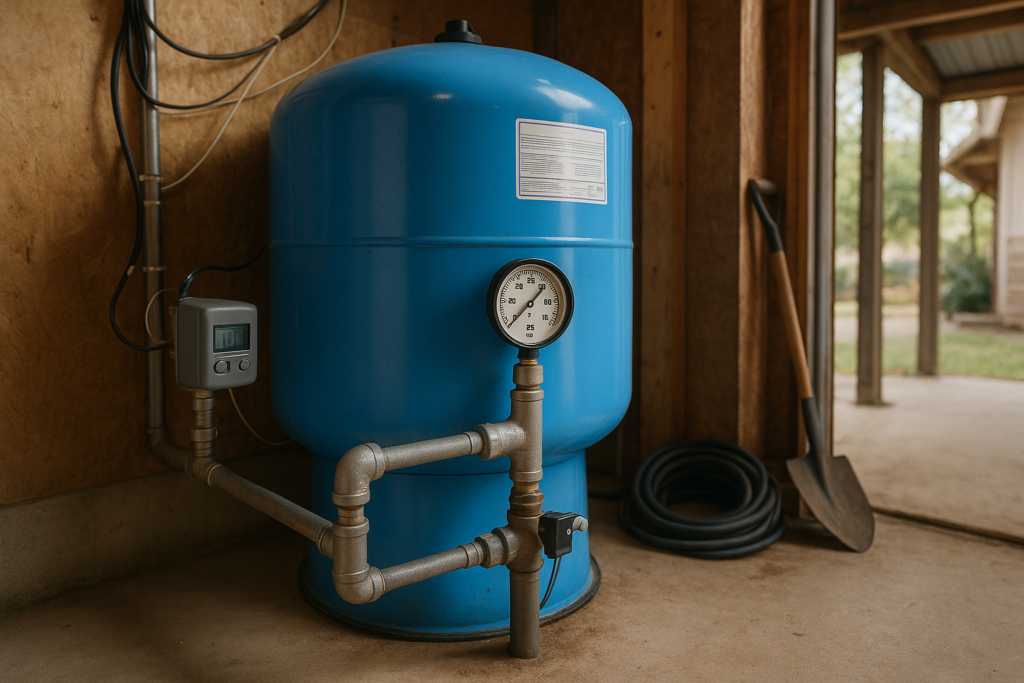
When neighbors in Santa Fe, TX call us because “the water pressure went crazy overnight,” we almost always start our diagnosis with the well pressure tank. That blue (or sometimes green) tank in the garage, well house, or yard is the quiet workhorse of your water well system. When the pressure tank is healthy, your water pressure feels steady, your pump system runs efficiently, and your household water supply stays reliable.
When the pressure tank is failing, though, things can go bad fast. We see low water pressure, pumps short cycling, air in water lines, and even contamination risks when small problems are ignored too long. Our team at B-E Waterwell Services LLC has spent years working on Texas water wells, and we’ve learned that most costly breakdowns are preventable with the right pressure tank maintenance and timely pressure tank repair or replacement.
In this article, we’ll walk through the pressure tank problems you should never ignore, how to recognize warning signs, what types of tanks are used in modern water systems, and how proper pressure tank installation and sizing protect your well pump and your wallet.
How a Well Pressure Tank Protects Your Pump, Water Pressure, and Wallet
A lot of homeowners in Santa Fe, TX are surprised when we explain how much the well pressure tank actually does. It’s not just a storage container; it’s a key control point for the entire water well system.
The real job of the pressure tank in your water well system
In a typical water well system, you have three main components working together:
– The well pump
– The pressure tank
– The pressure switch and control components
The well pump pulls groundwater from your well and pushes it into the pressure tank. Inside that tank, we maintain a carefully balanced air cushion. This air pressure keeps your water system pressurized so your faucets, showers, and irrigation systems can run without the pump turning on every second.
Here’s how it works in simple terms:
– The pressure switch is set to a “cut-in” and “cut-out” range (for example, 40/60 psi).
– As you use water, pressure in the tank drops.
– When it hits the lower setting, the pressure switch turns the pump on.
– The pump fills the pressure tank until it reaches the upper setting, then shuts off.
A correctly sized well pressure tank with the right pre-charge pressure allows the pump to rest between cycles. That translates to:
– Steady water pressure throughout the home
– Longer pump life due to fewer on/off cycles
– Better energy efficiency and lower power bills
– Less risk of sudden water pressure problems or complete loss of water
When we design or upgrade pump systems, we focus heavily on tank capacity and air pressure in the tank because those two factors dramatically change how the system behaves.
Common pressure tank types and why they matter
Modern water systems usually use one of two main pressure tank designs: the diaphragm pressure tank or the bladder pressure tank. Older Texas properties sometimes still have a steel pressure tank without an internal separation between air and water.
Here’s how they compare:
– Diaphragm pressure tank
A diaphragm pressure tank has a flexible rubber diaphragm permanently attached inside the tank, separating the air and water chambers. As water enters, the diaphragm flexes, compressing the air. We like these tanks because they typically resist waterlogging and maintain a stable pre-charge pressure over time. They’re a solid choice for many residential water well system upgrades.
– Bladder pressure tank
A bladder pressure tank uses a rubber bladder that looks like a big balloon inside the tank. Water goes inside the bladder, while compressed air surrounds it. Bladder tanks are easy to test and, in many cases, easier to replace if the bladder fails. However, if the bladder tears, you can end up with a rapid waterlogged pressure tank, and the tank usually has to be replaced.
– Steel pressure tank (non-bladder)
Older steel pressure tank designs do not have a bladder or diaphragm. Air and water share the same space, which means the air gradually dissolves into the water. The result? Frequent loss of air pressure in the tank, more maintenance, and a higher risk of waterlogged conditions. We still service steel pressure tanks on older Texas water wells, but we often recommend upgrading to a diaphragm or bladder style for reliability and energy efficiency.
When you understand which type of well pressure tank you have, it’s easier to spot early warning signs and decide whether you need pressure tank repair, recharging of air pressure, or full pressure tank replacement.
Warning Signs of Pressure Tank Problems You Should Never Ignore
We’ve walked into countless homes around Santa Fe, TX where the homeowner noticed “something off” weeks ago, but didn’t call until there was barely any water. Most of the time, the water pressure tank was telling a story long before the crisis. Recognizing early warning signs can prevent costly breakdowns and emergency repairs.
Waterlogged pressure tank, short cycling, and noisy systems
A waterlogged pressure tank is one of the most common and most serious problems we see. This happens when air pressure in the tank is lost or when a bladder or diaphragm fails and the tank fills up almost entirely with water.
Symptoms of a waterlogged pressure tank include:
– Pump short cycling (turning on and off every few seconds or minutes)
– Extreme swings in water pressure (strong, then suddenly weak)
– Pressure gauge going up and down rapidly
– A tank that feels heavy and “solid” when tapped
Short cycling is especially dangerous for your well pump. Every time the pump starts, it draws a big burst of electricity and generates heat. When we see a pump running over and over in short bursts, we know its life expectancy is dropping fast. Left unchecked, this can lead to:
– Burned-out pump motors
– Overheated pump controls
– Higher electric bills
– Emergency service calls when the water stops completely
A healthy well pressure tank gives your pump longer run times with proper rest periods. This reduces pump wear, improves energy efficiency, and avoids the need for premature pump replacement.
Air in water lines, low water pressure, and other red flags
Some pressure tank problems show up as annoying day-to-day issues with your household water supply. If we were walking through your home together, here are the things we’d want you to look and listen for:
Signs you might have a pressure tank failure starting:
– Sputtering faucets or air in water lines when you first turn on taps
– Low water pressure or water pressure problems at multiple fixtures
– The pump running even when you’re not using water
– Clicking from the pressure switch much more often than normal
– Visible leaks or rust on the pressure tank shell
Air in water lines can be caused by a failing bladder pressure tank, a waterlogged steel pressure tank, or actual air leaks on the suction side of the pump system. In any case, we never ignore it, because it can signal more serious issues down in the well or in the plumbing.
When we evaluate water pressure problems, we don’t just guess. We typically:
– Check tank pressure with a gauge (with the power off and tank drained)
– Compare pre-charge pressure to the pressure switch settings
– Inspect the tank for signs of corrosion, rust, or seam failure
– Watch the pump cycle and listen for unusual noises
– Evaluate the overall water system, including filters and treatment equipment
If we discover advanced pressure tank failure or a severely waterlogged pressure tank, we’ll lay out your options for pressure tank repair versus pressure tank replacement. Our goal is always to protect the well pump, restore steady water pressure, and keep your household water supply reliable.
Choosing the Right Pressure Tank Size, Setup, and Maintenance Plan
Once we’ve determined that a new well pressure tank is needed, or that your system is poorly sized, the next step is proper design and pressure tank installation. In Santa Fe, TX and across Texas properties we service, we’ve seen huge differences in pump life and water quality simply by getting the tank size and setup right.
Tank capacity, pre-charge pressure, and system design
Tank size isn’t just about how many gallons the label says. We look at:
– Tank capacity in gallons
– Drawdown (usable water per cycle) at your pressure range
– Pump horsepower and flow rate
– Household water supply demands (showers, appliances, irrigation systems)
– Future plans such as adding an irrigation well or a guest house
If the tank capacity is too small for the pump and home, you’ll get short cycling and higher wear on the pump system. If it’s significantly oversized without proper control, you can end up with sluggish pressure response and inefficiencies in some systems.
We recommend tank sizes based on:
– Number of bathrooms and fixtures
– Peak water flow needs (laundry plus showers, for example)
– Type of well pump (submersible vs. jet)
– Existing water treatment or filtration systems that affect water flow
Equally important is the pre-charge pressure, or air pressure in the tank when it’s empty. For most residential setups, we set the pre-charge 2 psi below the cut-in pressure on the pressure switch. So if your switch is 40/60, we want 38 psi air pressure in the tank, checked with a reliable tire gauge when no water is in the tank.
If the pre-charge pressure is too low:
– The tank becomes waterlogged more easily
– The pump runs more often
– Water pressure swings become more obvious
If the pre-charge pressure is too high:
– You’ll have very little usable drawdown
– The pump may struggle to reach the upper shutoff point
– You might see unusual water pressure problems at fixtures
During pressure tank installation or pressure tank maintenance visits, we always verify and adjust the pre-charge pressure so the tank and pressure switch work together smoothly.
Bladder vs diaphragm vs steel: which is right for your Santa Fe, TX home?
When we help homeowners choose between a bladder pressure tank, a diaphragm pressure tank, or replacing an older steel pressure tank, we look at both performance and long-term value.
A few guidelines we often share:
– Diaphragm pressure tank
Great for most modern residential systems. Durable, good resistance to waterlogging, and stable performance. We like these for households that want low maintenance and long life.
– Bladder pressure tank
Also excellent for homes, especially where we want easy diagnostics. If the bladder fails, we can quickly confirm the issue. They’re widely available and cost-effective. For many Santa Fe, TX families, this is the most common replacement option we recommend.
– Steel pressure tank
We typically only keep these when the homeowner wants to preserve an existing installation and understands the need for more frequent pressure tank maintenance. Without an internal barrier, these tanks are more prone to becoming a waterlogged pressure tank and usually need periodic air charging.
In all cases, we recommend choosing a quality brand that offers a solid warranty, and we back our work with a labor warranty as well. B-E Waterwell Services LLC repairs and replaces pressure tanks across North Houston, The Woodlands, Magnolia, TX, Tomball, Conroe, and surrounding areas, so we’ve seen which tanks actually hold up in real-world Texas conditions.
Regular maintenance is the final piece of the puzzle. A simple yearly check of:
– Pre-charge pressure
– Pressure switch function
– Tank shell condition (rust, moisture, leaks)
– Pump cycle behavior
can prevent major surprises. That’s why we offer maintenance programs tailored to local water well system needs.
Health, Safety, Costs, and When to Call B-E Waterwell Services LLC
Beyond comfort and convenience, a failing pressure tank can influence water quality, increase your costs, and sometimes contribute to contamination risks. We take these issues seriously because we rely on the same groundwater and water systems our customers do across Texas water wells.
Water quality, contamination risks, and iron buildup
While the pressure tank itself doesn’t create bacteria in well water, pressure tank failure can create conditions that allow contamination to spread or go unnoticed. For example:
– Rapid short cycling and pump stress can damage well seals or plumbing.
– A leaking or corroded steel pressure tank may introduce rust or sediment to your water.
– Pressure swings can stir up iron buildup and other deposits in pipes and filtration equipment.
We’ve seen cases where homeowners noticed:
– Discolored water
– Metallic tastes
– Sediment or slime in filters
but didn’t connect those symptoms to a struggling pressure tank and pump system. Sometimes we discover iron buildup and biofilm in older tanks or pipe runs that have been repeatedly stressed by poor water pressure and erratic flow.
If we suspect contamination or bacteria in well water, we recommend testing and, if needed, disinfection procedures or permanent water treatment solutions. However, we always start by stabilizing the water well system itself. You can’t maintain good water quality if your pump system and pressure tank are failing.
Good water pressure, steady water flow, and a healthy tank protect:
– Your plumbing fixtures
– Water heaters and appliances
– Filtration and softener equipment
– Overall household water supply safety
Costs, efficiency, and when to invest in pressure tank replacement
We’re often asked about well pressure tank cost and whether it’s worth repairing an old tank versus installing a new one. While every Texas property and water well system is different, we can share a few general insights.
Factors that affect well pressure tank replacement cost:
– Tank capacity (larger gallon size = higher cost)
– Type of tank (diaphragm pressure tank vs bladder pressure tank)
– Location and difficulty of access (well house, crawl space, buried connections)
– Additional work (new fittings, pressure switch, piping, or pump control updates)
In our experience working across Santa Fe, TX and the North Houston area, many residential well pressure tank replacements fall into a mid-range investment: not as expensive as a new pump system, but significant enough that you want it done right, by a licensed water well contractor. We always provide upfront pricing and explain options so you can choose what fits your budget and goals.
Why replacement often makes financial sense:
– A new, properly sized pressure tank reduces pump wear and delays the need for a new pump.
– You’ll see better energy efficiency because the pump isn’t fighting constant short cycling.
– You lower the risk of emergency repairs at the worst possible time.
– Modern tanks often come with strong manufacturer warranty coverage, which we pair with our own labor warranty.
If you’re unsure whether you need pressure tank repair, maintenance, or full pressure tank replacement, we can inspect the system, measure drawdown, check pre-charge pressure, and evaluate overall performance.
For more information about pressure tanks and well systems, you can also review educational resources from the Texas Water Development Board at: https://www.twdb.texas.gov/groundwater/index.asp
When should you call B-E Waterwell Services LLC right away?
– You hear the pump running constantly or short cycling rapidly.
– You experience sudden low water pressure across the entire home.
– You see visible leaks, rust, or bulging on the pressure tank.
– You have frequent air in water lines or sputtering at every faucet.
– You suspect contamination or changes in water quality tied to system issues.
We provide emergency service for critical failures and scheduled visits for routine pressure tank maintenance and inspections. Our team has worked on water well systems from Santa Fe, TX down toward the Gulf Coast and across North Houston, Magnolia, TX, The Woodlands, Tomball, and Conroe, so we understand local groundwater conditions and how they affect pump systems and pressure tanks.
If you’re living with inconsistent water pressure, noisy pump systems, or an older steel pressure tank that you’re not sure you can trust, now is the time to act—before a minor issue turns into a costly breakdown. Our passion is keeping your well pressure tank, pump, and entire water system running safely, efficiently, and reliably for years.
To schedule an inspection, ask about maintenance programs, or get help with emergency repairs, you can contact us directly through our website any time at https://bewaterwells.com/.