
Why Your Well Pressure Tank Deserves Attention Before It’s Too Late
If you depend on a private water well in Richmond TX, your pressure tank is quietly doing one of the most important jobs in your entire water system. It stores pressurized water so your faucets, showers, and appliances receive steady flow without forcing your well pump to kick on every single time you turn a handle. When that tank starts to fail, the warning signs can be subtle at first, but ignoring them almost always leads to expensive emergency repairs, a burned-out pump, or a complete loss of water to your home. At B-E Waterwell Services, we’ve spent years helping homeowners across Richmond TX, Magnolia TX, and the greater North Houston area recognize those warning signs early. In this guide, we walk you through seven clear symptoms that tell you it’s time for a replacement pressure tank for well water systems, explain the technical details behind each issue, and show you how to protect your investment with smart, proactive decisions.
How a Water Well Pressure Tank Actually Works
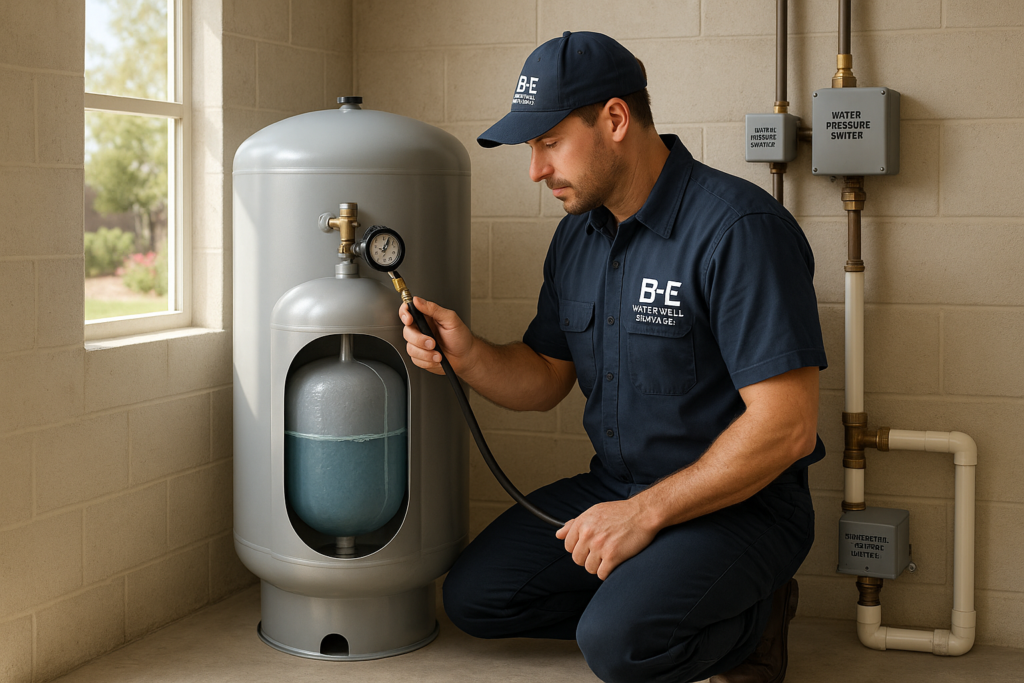
Before we dive into the warning signs, it helps to understand why a water well pressure tank matters so much. The tank sits between your submersible well pump and your home’s plumbing. Inside a modern bladder pressure tank, a flexible rubber bladder separates a pocket of compressed air from the stored water. When your submersible well pump pushes water into the tank, it compresses the air behind the bladder, building pressure. Once the pressure reaches a preset upper limit, usually around 50 or 60 PSI, the water pressure switch tells the pump to shut off. As you use water throughout your home, the compressed air pushes that stored water into the pipes, maintaining consistent flow until pressure drops to the lower cutoff point, typically 30 or 40 PSI. The water pressure switch then signals the pump to turn back on and refill the tank.
The Role of the Water Pressure Switch and Bladder
The water pressure switch is the brain of the operation. It reads the system pressure and communicates directly with your well pump and pressure tank to maintain that balanced cycle. If the bladder inside your bladder pressure tank ruptures or loses its integrity, the air charge escapes into the water side, and the tank can no longer hold a proper cushion of pressure. This means the pump has to work far harder, cycling on and off rapidly instead of resting between normal draw-down periods. That rapid on-off behavior is called short cycling pump activity, and it is one of the most destructive things that can happen to a submersible well pump. Understanding this relationship between your well pump and pressure tank is the first step toward recognizing when something has gone wrong and when you need a replacement pressure tank for well water systems.
Why Richmond TX Homeowners Face Unique Challenges
Here in Richmond TX and the surrounding areas, our soil composition, water table levels, and seasonal temperature swings create specific stresses on well components. High mineral content in groundwater can accelerate corrosion inside the tank, and our hot Texas summers push equipment harder than moderate climates do. That’s why regular pressure tank maintenance and periodic water system inspection are so important for homeowners relying on Texas water well services. At B-E Waterwell Services, we see these regional factors play out every week in the tanks we inspect and the well pressure tank replacement jobs we perform across North Houston and beyond.
Seven Clear Signs You Need a Replacement Pressure Tank for Well Water Systems
Now let’s get into the heart of the matter. These are the seven symptoms we encounter most often when a pressure tank is on its way out. If you recognize even one or two of them, it’s time to schedule a water system inspection with licensed water well technicians who can diagnose the issue accurately.
Sign 1 – Fluctuating Water Pressure Throughout the House
One of the earliest and most noticeable symptoms is fluctuating water pressure. You step into the shower and the flow surges strong, then drops to a trickle, then surges again. This pulsing effect happens because the tank can no longer maintain a steady air charge. Without that cushion, pressure swings wildly between the cut-in and cut-out points in rapid succession. Fluctuating water pressure is more than an annoyance. It stresses pipes, fittings, and appliances. If you notice this pattern, your water well pressure tank is almost certainly compromised, and a replacement pressure tank for well water systems should be on your short list.
Sign 2 – Short Cycling Pump Activity
Listen closely to your well pump. If you hear it clicking on and off every few seconds or every minute even when water usage is minimal, you are experiencing pump short cycling. A healthy well pump and pressure tank system allows the pump to run for a reasonable duration, fill the tank, and then rest. Short cycling pump behavior means the tank has lost its ability to store an adequate volume of pressurized water. Every unnecessary start puts enormous electrical and mechanical stress on your submersible well pump, dramatically shortening its lifespan. Pressure tank repair may temporarily address the air charge, but if the bladder has failed, the only lasting solution is a complete well pressure tank replacement.
Sign 3 – Persistent Low Water Pressure
Low water pressure that doesn’t improve no matter what you try is a classic red flag. While low water pressure can sometimes be traced to a clogged filter, a failing water pressure switch, or a drop in the well’s water level, the pressure tank is often the culprit. When the bladder ruptures, the tank becomes waterlogged, essentially turning into a heavy, water-filled vessel with no air cushion. The system can no longer push water to your fixtures with adequate force. Low water pressure troubleshooting should always include checking the tank’s air pre-charge with a tire gauge on the Schrader valve. If the reading is zero or far below the recommended setting, you likely need to replace well pressure tank components entirely.
Sign 4 – Air in Water Lines
Sputtering faucets that spit bursts of air followed by water are a telltale sign of air in water lines. This happens when the bladder inside the bladder pressure tank has torn, allowing compressed air to mix directly with the water supply. Occasional air in water lines might result from a recent pump service or a temporary well drawdown, but if it persists day after day, the integrity of your water well pressure tank has been compromised. Continued operation in this state accelerates wear on every component in the system.
Sign 5 – Rusty or Discolored Water
If your water suddenly develops a brownish, reddish, or otherwise discolored appearance, the inside of your tank may be corroding. Rusty or discolored water is especially common in older steel tanks that lack a protective bladder or whose bladder has failed, exposing the steel shell to constant water contact. Beyond the obvious aesthetic problem, rusty or discolored water can introduce sediment and bacteria into your plumbing. This is a water quality issue that goes beyond inconvenience. It’s a health and safety concern that warrants an immediate call to licensed water well technicians for a thorough evaluation and likely a well pressure tank replacement.
Sign 6 – Visible Corrosion, Leaks, or Sweating on the Tank
Take a close look at your pressure tank. Do you see rust spots on the exterior shell, moisture beading on the surface, or, worse, active dripping at seams or fittings? External corrosion is a strong indicator that internal corrosion is even more advanced. A small pinhole leak today can become a catastrophic rupture tomorrow, flooding your well house or utility room and potentially damaging electrical components, including the water pressure switch and pump controls. Pressure tank repair is not feasible when the steel shell itself has degraded. The only responsible path is to replace well pressure tank hardware with a new, properly sized unit. This is one area where preventing costly breakdowns truly pays for itself.
Sign 7 – The Tank Has Exceeded Its Pressure Tank Life Expectancy
Most quality bladder pressure tanks carry a pressure tank life expectancy of roughly 10 to 15 years under normal conditions. Some economy models may last as few as 5 to 7 years, while premium tanks with heavy-duty bladders can occasionally push past 15 years with diligent pressure tank maintenance. If your tank is approaching or has passed that window, proactive replacement is almost always smarter than waiting for a dramatic failure. We recommend that Richmond TX homeowners keep a record of installation dates and schedule a water system inspection with B-E Waterwell Services around the 8- to 10-year mark to evaluate remaining life.
Choosing the Right Replacement Pressure Tank for Well Water Systems
Once you’ve confirmed that your tank needs replacing, the next step is selecting the correct unit. This is where many homeowners make costly mistakes by simply buying whatever size is cheapest or happens to be on the shelf at the hardware store.
Sizing a Pressure Tank for Your Specific System
Sizing a pressure tank correctly is critical. An undersized tank will cause short cycling pump problems all over again, while an oversized tank wastes money and space without providing proportional benefit. The right water pressure tank size depends on several factors:
– Your submersible well pump’s flow rate in gallons per minute (GPM).
– The cut-in and cut-out pressure settings on your water pressure switch.
– Your household’s peak water demand, including irrigation if applicable.
– The drawdown volume you need between pump cycles.
As a general guideline, a home with a 10 GPM pump and a 30/50 pressure switch setting typically needs a tank with at least a 30- to 50-gallon drawdown capacity. But every situation in Richmond TX is unique, which is why we always perform a full evaluation before recommending a specific water pressure tank size. Proper sizing a pressure tank ensures your well pump and pressure tank operate in harmony, extending the life of both components and preventing costly breakdowns down the road.
Bladder Tank vs. Older Diaphragm and Galvanized Models
We almost exclusively recommend a bladder pressure tank for replacement installations. Compared to older galvanized or diaphragm-style tanks, bladder tanks offer superior separation of air and water, easier air charge maintenance, and longer pressure tank life expectancy. They resist waterlogging far better, which directly reduces the risk of pump short cycling and low water pressure issues. Reputable brands engineer their bladders from heavy-duty butyl rubber designed to withstand years of expansion and contraction cycles. When you invest in a quality replacement pressure tank for well water systems, you are investing in reliability and peace of mind.
The Well Pressure Tank Replacement Process and What It Costs
Many homeowners put off a necessary well pressure tank replacement because they’re uncertain about the process or worried about cost. Let us walk you through what to expect.
What Happens During Pressure Tank Installation
At B-E Waterwell Services, our pressure tank installation process follows a proven sequence:
1. We perform a complete water system inspection to confirm the diagnosis and check the condition of the submersible well pump, water pressure switch, and all associated plumbing.
2. We shut down and depressurize the system safely.
3. We disconnect and remove the old water well pressure tank.
4. We set the new tank’s air pre-charge to match your system’s cut-in pressure before connecting it. This step is essential for proper function.
5. We install the replacement pressure tank for well water systems, connecting all fittings, unions, and the water pressure switch.
6. We start the system, verify correct cycling, check for leaks, and confirm steady pressure at multiple fixtures throughout the home.
7. We document the installation date, tank model, and pre-charge setting so you have a clear record for future pressure tank maintenance.
The entire pressure tank installation typically takes a few hours for a straightforward swap. If our licensed water well technicians discover additional issues during the inspection, such as a failing submersible well pump or a corroded water pressure switch, we discuss those findings with you transparently before proceeding.
Cost to Replace Well Pressure Tank – What to Budget
The cost to replace well pressure tank hardware varies based on tank size, brand, and the complexity of the installation. For most residential systems in Richmond TX and the North Houston area, homeowners can expect a range roughly between $800 and $2,500, including the tank, labor, and associated fittings. Premium, larger-capacity tanks will be at the higher end, while standard residential units fall closer to the middle. The cost to replace well pressure tank equipment is a fraction of what you’d spend on an emergency pump replacement caused by years of unchecked short cycling. When you weigh the cost to replace well pressure tank components against the price of a new submersible well pump, which can run $3,000 to $6,000 or more installed, proactive replacement is clearly the wiser financial decision.
Pressure Tank Maintenance to Maximize Your New Investment
After a successful well pressure tank replacement, ongoing pressure tank maintenance is the key to reaching or exceeding the expected pressure tank life expectancy. Here’s what we recommend:
– Check the air pre-charge annually using a standard tire gauge. The pre-charge should be set 2 PSI below the cut-in pressure.
– Inspect the area around the tank for moisture, corrosion, or unusual noises.
– Test the water pressure switch operation at least once a year.
– Schedule a professional water system inspection every two to three years with a Texas water well services provider like B-E Waterwell Services.
– Address fluctuating water pressure, air in water lines, or any rusty or discolored water immediately rather than waiting.
These simple habits go a long way toward preventing costly breakdowns and keeping your well pump and pressure tank system running smoothly for the long haul.
Trust B-E Waterwell Services for Your Replacement Pressure Tank for Well Water Systems
We founded B-E Waterwell Services with a simple mission: to give homeowners across Richmond TX, Magnolia TX, and the entire North Houston region honest, expert care for their water wells. Our licensed water well technicians carry the training and hands-on experience to handle everything from straightforward pressure tank repair and well pressure tank replacement to full well pump and pressure tank system overhauls. We pride ourselves on transparent pricing, thorough diagnostics, and installations that are done right the first time.
Whether you’re dealing with low water pressure, air in water lines, pump short cycling, or a tank that’s simply reached the end of its pressure tank life expectancy, we’re here to help you choose and install the right replacement pressure tank for well water systems for your specific situation. Our team serves as a trusted Texas water well services provider, and we treat every customer’s home the way we’d treat our own.
If you’ve noticed any of the seven signs we’ve covered in this guide, or if your Magnolia TX well pressure tank or North Houston well pressure tank is approaching the decade mark, don’t wait for a midnight failure. Preventing costly breakdowns starts with a single phone call. Reach out to B-E Waterwell Services today to schedule your water system inspection and get a clear, no-pressure estimate on a well pressure tank replacement that protects your home, your pump, and your wallet.
Contact B-E Waterwell Services now to schedule your inspection and take the first step toward reliable, worry-free water for your Richmond TX home.