
Why Every Porter TX Homeowner on Well Water Needs to Understand Their Well Pressure Tank
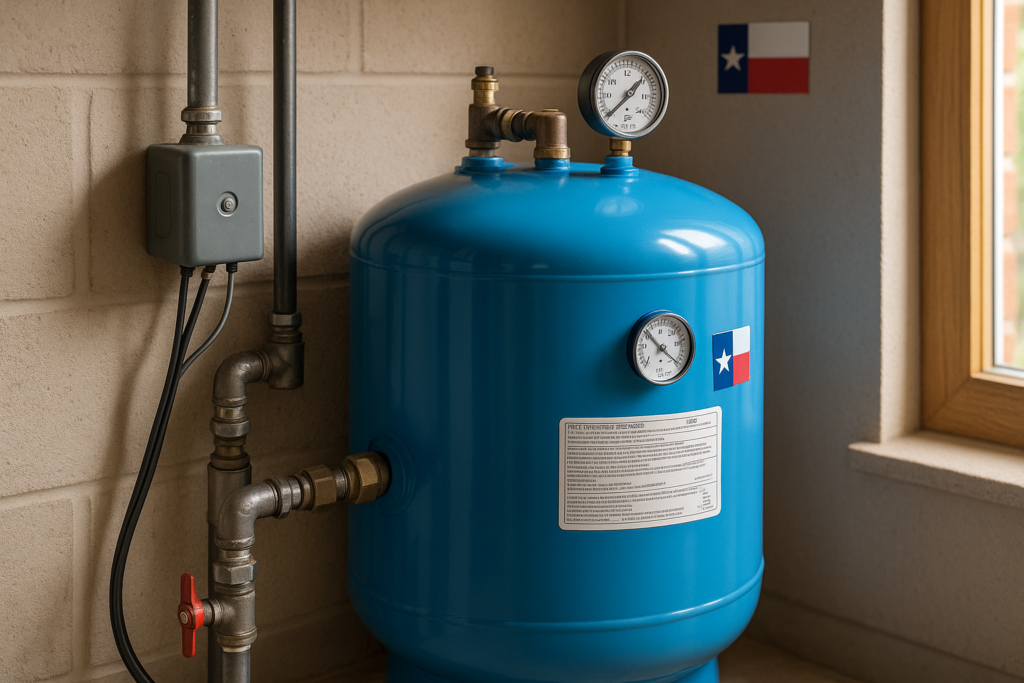
If you live in Porter TX and your home relies on a private water well, there is one piece of equipment sitting quietly in your garage, utility closet, or pump house that deserves far more attention than it usually gets. We are talking about the well pressure tank, the heart of your well water system that ensures water flows from your faucets on demand. When this tank is working properly, you barely notice it. When it starts to fail, however, the consequences can range from mildly annoying to downright expensive. At B-E Waterwell Services LLC, we have spent years helping homeowners across Porter TX, Tomball, The Woodlands, Magnolia, and greater North Houston diagnose, repair, and replace failing pressure tanks. Our goal with this article is to walk you through the problems you should never ignore, explain how the entire system works, and arm you with the knowledge you need to protect your home’s potable water system for years to come.
How a Well Pressure Tank Works and Why It Matters in Porter TX
Before we dive into problems, let us make sure everyone is on the same page about what a well pressure tank actually does. A water pressure tank stores water under air pressure so your home can have immediate, consistent water flow without your well pump running every single time you turn on a faucet. Think of it as a buffer between your well pump and your household plumbing. The well pump and pressure tank work together in a carefully balanced dance, with the pump filling the tank and the tank delivering water to your fixtures at a steady pressure.
The Role of the Pressure Switch and Pressure Gauge
Every well water system includes a pressure switch, which is the small electrical device mounted on or near the tank that tells the pump when to turn on and when to shut off. The pressure switch operates based on cut-in and cut-out pressure settings. For example, a common configuration is 30/50 PSI, meaning the pump kicks on when tank pressure drops to 30 PSI (the cut-in pressure) and shuts off when it climbs to 50 PSI (the cut-out pressure). Many homeowners in Porter TX prefer 40/60 PSI water pressure settings for stronger shower and faucet performance, especially in two-story homes.
Your pressure gauge, usually mounted right on the tank or the plumbing manifold, gives you a visual readout of where your system pressure stands at any moment. We always tell our customers that checking the pressure gauge once a month is one of the simplest forms of pressure tank maintenance you can perform. If the needle is erratic, stuck, or reading abnormally low, that is your first clue that something needs attention.
Bladder Tanks, Diaphragm Tanks, and Galvanized Steel Tanks
Not all well pressure tanks are built the same. The three main types you will encounter are the bladder pressure tank, the diaphragm pressure tank, and the older galvanized steel pressure tank.
– A bladder pressure tank uses a replaceable rubber bladder inside to separate the air charge from the water. This is the most common type we install across Porter TX and the surrounding areas because the bladder can be replaced without buying a whole new tank.
– A diaphragm pressure tank uses a permanently bonded rubber diaphragm to separate air and water. These are reliable but the diaphragm is not typically user-replaceable.
– A galvanized steel pressure tank is the old-school option with no bladder or diaphragm at all. Air and water sit in the same chamber, which eventually leads to the air being absorbed and the tank becoming waterlogged. We still find these in older Porter TX properties, and we almost always recommend upgrading to a modern bladder pressure tank.
Each type relies on an air charge, also called a pre-charge, on the air side of the tank. This pre-charge is what pushes the water out of the tank and into your pipes. If the air charge is lost or incorrect, your entire well water system suffers. We will cover that problem in detail shortly.
Pressure Tank Problems That Demand Immediate Attention
Now let us get into the heart of the matter. These are the well pressure tank problems we see most often in Porter TX, and every one of them is something you should never ignore.
Well Pump Short Cycling
Well pump short cycling is one of the most common and most damaging problems we encounter. Short cycling means your well pump is turning on and off far more frequently than it should, sometimes every few seconds. Under normal conditions, when the pressure switch triggers the pump, the pump should run for at least a minute or two to refill the tank. If the tank has lost its air charge or the bladder has ruptured, there is very little space to store water, so the pump runs in rapid, short bursts.
Why is this dangerous? Because every time a well pump starts, it draws a massive surge of electricity. Frequent cycling generates excessive heat in the motor, wears out the pressure switch contacts faster, and can cut the lifespan of a well pump in half. We have seen homeowners in Porter TX spend thousands of dollars on premature pump replacements simply because a $300 to $800 well pressure tank issue went unaddressed. If you hear your pump clicking on and off repeatedly, do not wait. Contact a licensed Texas water well contractor immediately.
Waterlogged Pressure Tank
A waterlogged pressure tank is exactly what it sounds like: a tank that has become completely or mostly filled with water because the air charge has been lost. In a bladder pressure tank, this usually means the bladder has failed. In an older galvanized steel pressure tank, the air simply gets absorbed into the water over time.
Signs of a waterlogged pressure tank include:
– The tank feels uniformly heavy and cold when you tap on it, with no hollow sound near the top
– Well pump short cycling, as described above
– Sudden bursts of pressure followed by rapid drops
– The pressure gauge reading fluctuates wildly when water is being used
A waterlogged tank is a guaranteed path to pressure tank failure if left uncorrected. In many cases, pressure tank replacement is the most cost-effective solution, especially if the tank is older than seven to ten years.
Low Water Pressure Throughout the Home
Low water pressure is the symptom that brings most Porter TX homeowners to pick up the phone and call us. While there are many potential causes, including a failing well pump, clogged filters, or plumbing restrictions, the well pressure tank is often the culprit.
If your water pressure settings are correct on the pressure switch but you are still experiencing low water pressure, the problem may be a failing bladder, an incorrect air charge or pre-charge, or a tank that is simply too small for your household demand. Pressure tank sizing plays a critical role here. A tank that was adequate when it was just a couple living in the home may not support a growing family with multiple bathrooms, an irrigation system, and modern appliances that demand higher flow rate in GPM.
We generally recommend a minimum tank size that can support your well pump’s flow rate in GPM without causing the pump to short cycle. For example, a pump delivering 10 GPM typically pairs well with a tank that provides at least a one-minute drawdown, which means roughly a 30 to 40 gallon or larger bladder pressure tank depending on your water pressure settings. Proper pressure tank sizing is not a guessing game, and getting it wrong leads to chronic problems.
Leaking Pressure Tank
A leaking pressure tank is an obvious problem, but you might be surprised how many homeowners tolerate small leaks for months before seeking help. Even a minor drip from a fitting, valve, or the tank body itself can cause water damage to your home, promote mold growth, and indicate that the tank’s structural integrity is compromised. If you notice a leaking pressure tank, especially from the body itself rather than a fitting, pressure tank replacement is usually the only safe option.
Corrosion on a galvanized steel pressure tank is a particularly common cause of leaks. We have seen tanks in Porter TX homes that are rusted through at the bottom, creating a slow puddle that eventually damages floors, drywall, and even electrical systems.
Pressure Tank Maintenance, Troubleshooting, and When to Call a Professional
We believe strongly in empowering our customers with knowledge. Here are practical pressure tank maintenance and pressure tank troubleshooting steps you can take, along with guidance on when it is time to call in a professional.
Simple Maintenance Steps Every Homeowner Can Do
Routine pressure tank maintenance does not require special tools or expertise. Here is what we recommend to every Porter TX homeowner with a well water system:
1. Check the pressure gauge monthly. Make sure it reads within your expected cut-in and cut-out pressure range. If the gauge seems stuck or inaccurate, replace it. A new pressure gauge costs only a few dollars and provides invaluable diagnostic information.
2. Listen for short cycling. Stand near your well pressure tank and have someone run water inside the house. If the pump clicks on and off more than once every couple of minutes, you likely have a problem.
3. Test the air charge annually. Turn off the pump and drain the tank completely by opening a faucet. Then use a standard tire pressure gauge on the Schrader valve at the top of your bladder pressure tank or diaphragm pressure tank. The pre-charge should be set to 2 PSI below your cut-in pressure. So if your cut-in is 30 PSI, the air charge should read 28 PSI.
4. Inspect for leaks and corrosion. Walk around the tank and check all fittings, the base, and any visible piping for moisture, mineral deposits, or rust.
5. Test your water quality periodically. A failing tank can introduce sediment, rust, or bacterial growth into your potable water system. The Texas Commission on Environmental Quality recommends annual testing for private wells, and we wholeheartedly agree. Clean, safe drinking water is the entire point of your potable water system, and a degraded tank puts that at risk.
Pressure Tank Troubleshooting When Something Goes Wrong
If you are experiencing low water pressure, erratic pressure, or any of the symptoms we described above, here is a basic pressure tank troubleshooting sequence:
– Step one: Check the pressure gauge on the tank. If it reads zero or near zero, the pump may not be running. Check your electrical panel for tripped breakers.
– Step two: If the pressure gauge reads within normal range but water flow is weak, check your household filters and look for partially closed valves.
– Step three: Turn off the pump, drain the tank, and check the air charge. If the bladder has ruptured, water will come out of the Schrader valve when you press the pin.
– Step four: Listen for the pressure switch clicking. If it clicks but the pump does not run, the pump or its wiring may be the issue. If the switch does not click at all, the pressure switch itself may need replacement.
– Step five: If the tank is waterlogged, old, or leaking, it is time to call for professional pressure tank replacement.
We always encourage Porter TX residents to attempt safe, basic diagnostics, but anything involving electrical work, pump removal, or tank replacement should be handled by a licensed Texas water well contractor. Working with high-pressure water systems and electrical components is genuinely dangerous if you are not trained.
Upgrading Your System: Constant Pressure and Modern Solutions for Porter TX Homes
Sometimes the best answer to recurring pressure tank problems is not just a repair but a system upgrade. Our team has been installing modern solutions across Porter TX, Magnolia, Tomball, The Woodlands, and North Houston that eliminate many of the headaches associated with traditional well pressure tank setups.
Constant Pressure Systems and Variable Speed Drives
A constant pressure system uses a variable speed drive, also known as a VFD, to adjust your well pump’s speed in real time based on demand. Instead of the pump running at full speed until the tank hits cut-out pressure and then shutting off completely, a VFD ramps the pump up or down to maintain a steady PSI. This means:
– No more pressure fluctuations when multiple fixtures are running
– Dramatically reduced well pump short cycling
– A much smaller well pressure tank is needed, sometimes as small as a one-gallon unit, because the tank is only there to prevent pump deadheading rather than storing large volumes
– Lower energy consumption and extended pump life
We have installed constant pressure systems in Porter TX homes where families were frustrated by low water pressure in upstairs bathrooms or saw their pump cycling every time the irrigation system kicked on. The difference is transformative. While the upfront cost of a constant pressure system is higher than a standard water pressure tank replacement, the long-term savings on pump wear, energy, and maintenance are significant.
Professional Water Well Pump and Tank Installation
Whether you need a straightforward pressure tank replacement or a complete water well pump and tank installation, the quality of the installation determines how long the system lasts and how well it performs. At B-E Waterwell Services LLC, every water well pump and tank installation we perform follows Texas state regulations and manufacturer specifications. We properly size every component, verify flow rate in GPM, set accurate cut-in and cut-out pressure settings, calibrate the air charge, and test the entire potable water system before we consider the job complete.
We are proud to serve as a licensed Texas water well contractor, and we stand behind our work. Whether you need well pressure tank service in Magnolia TX, well pressure tank repair in Tomball, The Woodlands, or North Houston, or a brand-new water well pump and tank installation in Porter TX, we bring the same level of care and expertise to every project.
Protect Your Home, Your Water, and Your Investment
Your well pressure tank is not just a metal cylinder sitting in a corner. It is the critical link between your well pump and every faucet, shower, dishwasher, and washing machine in your home. Ignoring the warning signs of pressure tank failure, whether it is low water pressure, short cycling, a waterlogged tank, or visible leaks, puts your well pump at risk, threatens the safety of your potable water system, and can lead to costly emergency repairs.
We have built our reputation in Porter TX and across North Houston by treating every customer’s well water system as if it were our own. From routine pressure tank maintenance and pressure tank troubleshooting to complete pressure tank replacement and cutting-edge constant pressure system installations, our team at B-E Waterwell Services LLC is here to help.
If you are dealing with any of the problems described in this article, or if it has simply been a while since anyone has inspected your well pressure tank, do not wait for a small issue to become a big one. Reach out to us today at bewaterwells.com to schedule an inspection, request a quote, or ask any questions about your well water system. We are ready to make sure your water flows strong, clean, and reliably for years to come.