
When Your Well Pressure Tank Starts Sending Warning Signs
If you own a home or business in The Woodlands TX that relies on a private well, your well pressure tank is arguably the most important component keeping water flowing smoothly through every faucet, shower, and appliance. Yet most property owners never think about their pressure tank until something goes wrong. We have seen it time and again — a homeowner notices sputtering faucets, a pump that never seems to stop running, or water pressure that swings wildly from strong to weak. These are not minor annoyances. They are signals that your well pump and pressure tank system may be heading toward a costly breakdown. The good news is that many of these issues are preventable. In this guide, we walk you through the simple checks, common problems, and proven solutions that could save your entire well system from premature failure.
Understanding How a Well Pressure Tank Works in The Woodlands TX
Before you can troubleshoot a problem, it helps to understand what a pressure tank actually does and why it matters so much to your daily water supply. At its core, a well pressure tank serves as a buffer between your well pump and your household plumbing. When the pump draws water from the ground, it pushes that water into the pressure tank, where it is stored under pressure until you open a tap. This design means your pump does not have to kick on every single time someone flushes a toilet or fills a glass of water. Instead, the tank provides a ready reserve of pressurized water, and the pump only activates when the tank’s internal pressure drops to a predetermined level.
The Role of Cut-In and Cut-Out Pressure Settings
Every well pressure tank system is governed by a pressure switch, which is the small electrical device typically mounted on or near the tank. The pressure switch monitors the water pressure inside the tank and tells the pump when to turn on and when to shut off. These two trigger points are known as the cut-in and cut-out pressure settings. The cut-in pressure is the lower threshold — when tank pressure drops to this level, the switch activates the pump. The cut-out pressure is the upper threshold — once the tank reaches this pressure, the switch turns the pump off.
A common factory setting is 30/50, meaning the pump kicks on at 30 PSI and shuts off at 50 PSI. Some systems use 40/60 settings for homes that need higher water pressure. Getting these cut-in and cut-out pressure values right is critical. If they are set incorrectly, you may experience fluctuating water pressure, excessive pump cycling, or inadequate flow to upper floors and distant fixtures. We always recommend having a professional verify these settings during routine well pressure tank maintenance.
Three Main Types of Pressure Tanks
Not all pressure tanks are built the same. Understanding which type you have helps you diagnose problems faster and make better replacement decisions.
– Bladder pressure tank: This is the most popular design in modern residential and commercial water systems. Inside the steel shell sits a flexible rubber bladder that separates the air charge from the stored water. As water fills the bladder, it compresses the air on the other side, creating the pressure that pushes water through your plumbing. When the bladder fails, water contacts the tank shell directly, often leading to a waterlogged pressure tank.
– Diaphragm pressure tank: Similar in concept to the bladder model, a diaphragm pressure tank uses a permanently bonded rubber diaphragm rather than a removable bladder to separate air and water. These tanks are reliable and long-lasting, though the diaphragm cannot be replaced independently — if it fails, the entire tank must be swapped out.
– Galvanized steel pressure tank: These are the older-style tanks that many longtime well owners in The Woodlands TX and surrounding areas still have on their properties. A galvanized steel pressure tank relies on a visible air volume cushion sitting directly on top of the water inside the tank, with no physical barrier between the two. Over time, the air is absorbed into the water, the tank becomes waterlogged, and the pump begins short cycling. While durable in construction, galvanized steel pressure tanks require more frequent attention and are gradually being phased out in favor of bladder and diaphragm models.
We have serviced all three types extensively across North Houston well services calls, and our recommendation for most homeowners today is a quality bladder pressure tank for its efficiency, longevity, and ease of maintenance.
Common Pressure Tank Problems and How to Spot Them
Knowing the warning signs of a failing pressure tank can save you hundreds or even thousands of dollars in emergency repairs. Here are the most frequent issues we encounter during pressure tank troubleshooting visits throughout The Woodlands TX and the broader Magnolia TX well services area.
Short Cycling Well Pump
Short cycling well pump behavior is the single most common complaint we hear from well owners. Short cycling happens when the pump turns on and off rapidly — sometimes every few seconds — rather than running in long, steady cycles. If you stand near your pressure tank and hear the pump clicking on and off repeatedly while water is being used, you are witnessing short cycling in real time.
What causes a short cycling well pump? In the majority of cases, the answer is a waterlogged pressure tank. When the bladder or diaphragm inside the tank ruptures, or when a galvanized steel pressure tank loses its air charge, there is no longer an adequate air volume cushion to absorb pressure fluctuations. The tank fills almost entirely with water, leaving very little room for the compressed air that normally keeps the pump from cycling excessively. With nowhere to store pressurized water efficiently, the pump must fire up almost continuously.
Short cycling well pump issues do not just waste electricity. They dramatically shorten the lifespan of your well pump motor, which can cost $1,500 to $3,000 or more to replace. Catching this symptom early through regular pressure tank troubleshooting can prevent a far more expensive pump replacement down the road.
Fluctuating Water Pressure and Low Water Pressure From Well
Have you noticed that your shower pressure surges and drops while you are standing under the water? Or perhaps certain fixtures in your home barely produce a trickle while others seem fine? Fluctuating water pressure is a hallmark sign that your well pump and pressure tank system is not functioning correctly.
Several factors can cause fluctuating water pressure:
– A failing bladder pressure tank or diaphragm pressure tank that can no longer maintain consistent air charge separation
– An improperly adjusted pressure switch with cut-in and cut-out pressure settings that are too close together
– A partially clogged filter or sediment screen restricting flow
– A well pump that is losing capacity due to wear
Low water pressure from well systems is a closely related issue. If every fixture in your home delivers weak, unsatisfying pressure, the problem may be a waterlogged pressure tank that has lost its pre-charge, a pressure switch that is set too low, or a declining well pump. Low water pressure from well setups can also indicate a drop in your well’s static water level, which is something we monitor closely during Magnolia TX well services and North Houston well services inspections.
We encourage every homeowner experiencing low water pressure from well sources to schedule a professional evaluation rather than simply adjusting the pressure switch, because masking the symptom without diagnosing the root cause often leads to bigger failures.
Leaking Pressure Tank
A leaking pressure tank is impossible to ignore for long. You may notice water pooling around the base of the tank, rust stains on the floor, or corrosion and mineral deposits forming on fittings and connections. A leaking pressure tank is almost always a sign that the unit has reached the end of its useful life, particularly if the leak is coming from the tank shell itself rather than a threaded fitting.
In galvanized steel pressure tank models, internal corrosion is the usual culprit. In bladder pressure tank and diaphragm pressure tank models, a ruptured bladder or diaphragm can allow water to contact the interior steel wall, accelerating rust from the inside out. Either way, a leaking pressure tank typically requires full pressure tank replacement rather than a simple repair. We have responded to leaking pressure tank emergencies across The Woodlands TX where the homeowner had no idea the tank was deteriorating until water started spreading across the utility room floor.
Simple Checks You Can Perform for Well Pressure Tank Maintenance
We firmly believe that informed homeowners make the best decisions about their well systems. While professional service is essential for major repairs, there are several well pressure tank maintenance steps you can perform on your own to catch problems early.
Check the Air Charge on Your Pressure Tank
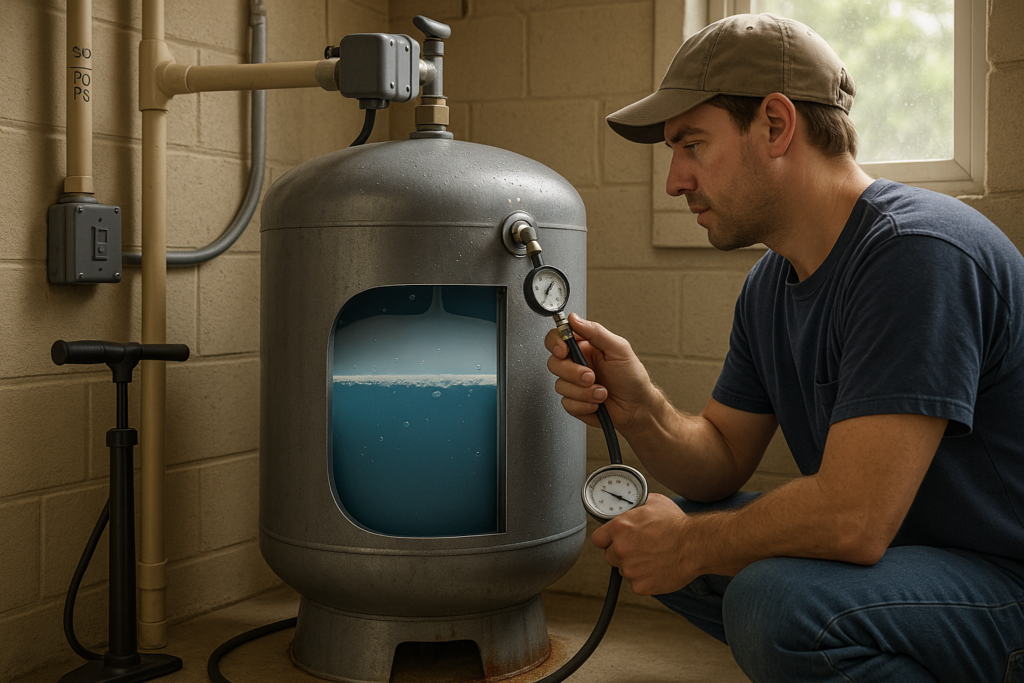
Every bladder pressure tank and diaphragm pressure tank has a Schrader valve — it looks just like the valve on a car tire — usually located on top of the tank. You can use a standard tire pressure gauge to check the air charge. Here is how:
1. Turn off power to the well pump at the breaker.
2. Open a nearby faucet and let the water run until the tank is completely drained and the flow stops.
3. Press your tire gauge onto the Schrader valve and read the pressure.
4. The air charge should be set to 2 PSI below your cut-in pressure. For a 30/50 system, that means 28 PSI. For a 40/60 system, it should be 38 PSI.
5. If the reading is low, add air with a bicycle pump or small compressor. If you cannot get a reading at all, the bladder or diaphragm has likely failed, and you need pressure tank repair or pressure tank replacement.
This single check is the most valuable piece of well pressure tank maintenance a homeowner can do. We recommend performing it at least once a year.
Listen and Observe
You do not need specialized tools to notice the early signs of trouble. Make a habit of visiting your pressure tank periodically and paying attention to the following:
– Does the pump cycle on and off more frequently than it used to? That points to short cycling well pump behavior.
– Is there visible moisture, rust, or mineral buildup on the tank or fittings? These could indicate a leaking pressure tank or corroding connections.
– Does tapping the side of the tank produce a dull thud all the way up, rather than a hollow ring in the upper portion? A tank that sounds full of water from bottom to top is likely waterlogged, meaning the air volume has been lost.
– Is the pressure switch making a chattering or buzzing noise? This can indicate burned contacts or a failing switch that needs replacement.
These simple observations, combined with the air charge check described above, form the foundation of effective pressure tank troubleshooting that any well owner can practice.
Know When to Call a Professional
While basic well pressure tank maintenance is within reach of most homeowners, certain situations call for professional expertise. We recommend contacting a qualified well service company when:
– Your pressure tank is more than 10 to 15 years old and showing signs of decline
– You suspect the well pump itself is failing, not just the tank
– You need pressure switch adjustment or replacement
– The tank is waterlogged and air recharging does not hold
– You require pressure tank replacement and need proper sizing for your residential and commercial water systems
– You are experiencing persistent low water pressure from well sources despite basic troubleshooting
Our team at B-E Waterwell Services LLC specializes in pressure tank repair and pressure tank replacement for properties across The Woodlands TX, Magnolia TX, and the greater North Houston area. We work on both residential and commercial water systems, and we bring the diagnostic tools and experience needed to pinpoint problems quickly.
Why The Woodlands TX Homeowners Trust Our Well Pressure Tank Expertise
We have built our reputation one well system at a time. Our passion is helping families and businesses throughout North Houston maintain reliable, safe, and efficient water systems. Whether you need a straightforward pressure tank repair, a complete pressure tank replacement, or a comprehensive evaluation of your well pump and pressure tank system, we approach every job with the same commitment to quality and honest communication.
Here is what sets our approach apart:
– We diagnose before we prescribe. We never recommend pressure tank replacement unless it is truly necessary. Many issues can be resolved with a pressure switch adjustment, an air charge correction, or a minor pressure tank repair.
– We size tanks correctly. An undersized pressure tank leads to short cycling well pump problems and premature wear. We calculate the right tank size based on your pump’s flow rate, your household demand, and your cut-in and cut-out pressure preferences.
– We educate our customers. We walk you through every finding and show you exactly what we are doing and why. Our goal is to make well pressure tank maintenance less mysterious and more manageable for every property owner.
– We serve a wide area. From The Woodlands TX to Magnolia TX well services and across North Houston well services territories, we are positioned to respond quickly when your well system needs attention.
Fluctuating water pressure, a short cycling well pump, a waterlogged pressure tank, or a leaking pressure tank — none of these problems get better on their own. They get worse, and they get more expensive. The earlier you address them, the more money and stress you save.
Protect Your Well System Before Small Problems Become Big Ones
Your well pressure tank is a hardworking, often overlooked piece of equipment that directly impacts your daily comfort and the longevity of your entire well pump and pressure tank system. By understanding how your pressure tank functions, recognizing the warning signs of failure, and performing basic well pressure tank maintenance checks throughout the year, you put yourself in the strongest possible position to avoid emergency breakdowns and costly repairs.
Remember the essentials: check your air charge annually, listen for short cycling well pump activity, watch for signs of a leaking pressure tank or waterlogged pressure tank, and never ignore persistent fluctuating water pressure or low water pressure from well sources. These simple habits are the difference between a well system that serves you reliably for decades and one that fails when you need it most.
If you are in The Woodlands TX or anywhere in the North Houston area and you suspect your pressure tank is not performing the way it should, we are here to help. Whether it is pressure tank troubleshooting, pressure tank repair, or a full pressure tank replacement, our team at B-E Waterwell Services LLC has the knowledge and hands-on experience to get your water flowing right again.
Ready to schedule an inspection or have questions about your well system? Contact us today at B-E Waterwell Services LLC and let us take the guesswork out of keeping your water reliable, consistent, and worry-free.